Oxygen Therapy in Public and the Quiet Social Reality of Living with Sarcoidosis
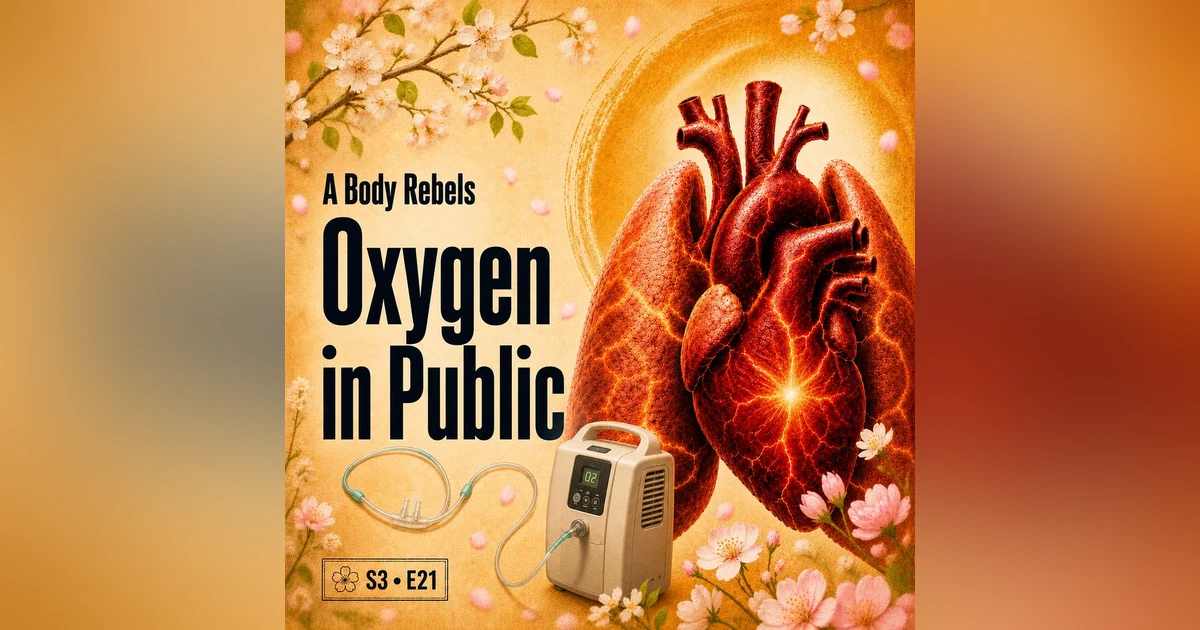


Wearing oxygen in public with sarcoidosis changes more than breathing. It changes the way people look at you, the way they try not to look at you, and the quiet assumptions they carry about what chronic illness is supposed to look like. In elevators, stores, and ordinary public spaces, those silent reactions tell their own story. This episode explores oxygen therapy, visible illness, social discomfort, and the strange gap between expectation and reality. It is about being seen, being misread, and learning that sometimes the hardest part of chronic illness is not the symptom itself, but what happens when the world suddenly notices it.
This podcast is narrated using an AI voice. The words, reflections, and lived experience are my own.
More info about Sarcoidosis and to donate toward research: The Foundation For Sarcoidosis Research
The elevator doors slid shut, and before I even lifted my eyes, I could feel it. That tiny shift in the air. Somebody glanced and glanced again, and then came that familiar moment when they realized I already knew exactly what they were doing. Hello. And welcome to Thoughts While Surviving Chronic Illness. I'm Tate. Today I want to talk about what happens when oxygen makes your illness visible to people who do not quite know what to do with that. I do not remember the exact first time I noticed it, only the first time I realized it had become a pattern. Elevators made it obvious. Smallbox, no escape, a handful of strangers trying to act like everybody's just thinking about what floor they need, when really they are trying to solve the mystery standing next to them. I would step in, press the button, and there it was. A quick look. Then a second one, a little less subtle. Then the instant retreat, like eye contact with a person on oxygen, might accidentally turn into a conversation about mortality before lunch. Suddenly the numbers above the door became absolutely fascinating. Floor two, floor three, riveting stuff. Apparently the display held all the answers. So I usually gave them an out. I looked up too. Not because I cared about the floors, but because sometimes kindness looks like pretending not to notice people pretending not to notice you. Still, you can feel the questions hanging there. Where is the oxygen coming from? Why does he have it? Is he sick? He does not look sick. That one always gets me. He does not look sick. I never know what people expect exactly. A sash, a warning label, some official costume department for the chronically ill. Because from where I am standing, sick usually looks like a person doing their best to seem fine in public while their body quietly files complaints in the background. And the weird thing is, once people notice the oxygen, it is not only me they are thinking about anymore. For a second they are thinking about breathing itself, their own lungs, their own body, that whole fragile arrangement we all walk around in, acting like it is permanent and dependable, until one day it very much is not. That is usually when the discomfort peaks. When the doors open, I step out, they stay in, and all those unasked questions remain floating around that elevator like stale air. After a while, I started noticing the same thing everywhere else. In stores, on sidewalks, in parking lots, anywhere people have enough time to look, then look again, then try to turn the second look into some kind of innocent coincidence. Most of the time it is confusion more than anything else. You can almost see the loading wheel spinning in their head. Sometimes it is curiosity, sometimes concern. Sometimes that awkward little performance people do and they want credit for not staring while very much still staring. And every now and then somebody just fully commits. Not cruelly, not even rudely exactly, just with determination. Like the answer might reveal itself if they maintain eye contact long enough. Spoiler alert, it does not. What I found interesting was how different age groups handled it. People around my age or younger usually clock it fast and move on. Their brains seem to say, well, that is information, and I am not emotionally renovating the house over it today. Older people tend to linger a little longer, not always out of nosiness. Sometimes it feels more like recognition, not full understanding, not shared biography, just that subtle look of somebody who knows the body can change the terms of the agreement without asking first. And sometimes they ask direct questions. Where do you keep your oxygen? Honestly, I appreciate that more than the weird little dance. It cuts right through the social choreography. No pretending, no staring at ceiling tiles like they have become spiritually significant, just one person acknowledging what is there and another person answering. When I first started wearing oxygen regularly, I hated it. The looks, the questions, the sudden visibility of it all. It felt like every ordinary errand had turned into a low-budget stage production called Man Trying to Buy Groceries while also existing publicly. Every movement felt louder. Every public space felt smaller. So I adapted. In colder weather, the tubing disappears through a jacket. In warmer weather, under a shirt. The pack is small, tucked into a backpack that does not announce itself. From a distance, I look like anybody else going about his day. It is only when people get closer that the details come into focus. And that is when their assumptions trip over themselves because most people still have a very fixed image of oxygen. They picture someone much older, attached to a big tank, moving slowly, breathing hard, looking exactly the way television and advertisements have taught them illness is supposed to look. So when they see something that does not match that script, it throws them off. One person once asked if it was some kind of athletic training device. I had to pause because that was not even in my top 10 guesses. And a part of me really wanted to say, yes, absolutely. I am training for the Olympic event of existing while slightly oxygenated, trying to shave seconds off my personal best in walking to the produce section. I did not say that, but I thought it, and honestly, that helped. Sometimes humor takes just enough weight off a moment that you can carry it without letting it burrow under your skin. Because eventually I realized this is not really about me as much as it feels like it is. It is about expectation. It is about the stories people absorb about illness, disability, aging, strength, weakness, and what all of those are supposed to look like from the outside. And when you do not match the picture they already had in mind, their discomfort shows up before their understanding does. Living with sarcoidosis taught me that the social side of illness can be just as strange as the physical side. Not louder, maybe, not more important, but strange in its own quiet way. You start to notice things. The difference between curiosity and kindness, the difference between discomfort and judgment, the difference between someone seeing equipment and someone seeing a person. And you begin to understand that most people are just trying to make sense of what is in front of them with whatever limited frame of reference they have. They are comparing what they believe to what they see. And sometimes those two things do not line up cleanly. I still get self-conscious, of course I do. I would love to tell you I rose above all that and now glide through public spaces like some enlightened prophet of respiratory equipment, but no, I am still a person. I still catch my reflections sometimes and think, well, this was not exactly the glamorous third act I had pictured. But then I remember what the oxygen actually is. It is not failure, it is not surrender, it is not some dramatic symbol designed to make strangers and elevators uncomfortable. It is support, it is help. It is the thing that lets my body do what it needs to do so I can keep moving through the world. And when I remember that, the staring matters less. Because the staring was never the story. It is just noise. The real story is quieter than that. It is in the breath itself, in the decision to keep going out anyway, to run the errand, to get in the elevator, to walk through the store, to be seen exactly as you are, even when the world has not updated its definitions yet. That takes something. Maybe not courage in the grand cinematic sense, maybe just stubbornness, maybe just practicality, maybe the deeply unglamorous determination to live your life without letting other people's discomfort become your problem. And yes, sometimes I still play along with the moment, not to embarrass anybody, just because there's something oddly human in it. That brief silent exchange where one person is confused, the other person knows they are confused, and both of you are trying to navigate the moment without making it worse. I think there is something revealing in that. None of us come with captions. None of us are as obvious as people think. And maybe the longer you live with chronic illness, the more clearly you see how often people are reacting not to reality, but to whatever story they were already carrying in their heads. Maybe that is the deeper thing Oxygen in Public taught me. Not just that illness becomes visible, but that visibility makes other people show themselves too. Their fear, their empathy, their awkwardness, their assumptions, their gentleness when they have it. And sometimes, if you are lucky, they get past the equipment, past the surprise, past the image they were expecting. And they just see the person. That matters more than people realize. Because at the end of the day, that is what most of us want. Not a performance of pity, not a gold medal for resilience, not a group panel discussion in the elevator about why we are carrying a backpack with a secret plot twist in it. Just to be seen as a person. A person living a life, a person managing what needs to be managed, a person breathing with a little help, and still very much here. And sometimes that is enough to make the whole thing feel a little less lonely. And that's one of the strange things about living with illness. On paper, it may be called rare, but once it shows up in your body, your lungs, or your heart, it stops feeling rare pretty quickly. Sarcoidosis is only rare until you're the one living with it. I'm Tate, and this is Thoughts While Surviving Chronic Illness. Thanks for being here. If something in this stayed with you, there's a text link in the show notes for short messages. I can read them in reply, but I only see the last digits of your number. For longer messages, the best place to reach me is through the website. And if you enjoy this podcast, please rate, review, and share it. New episodes drop every Tuesday and Friday. So until next time, stay safe, be happy, and most of all, keep breathing.