MiniCast: The Hidden Side Effects of Prednisone No One Warns You About
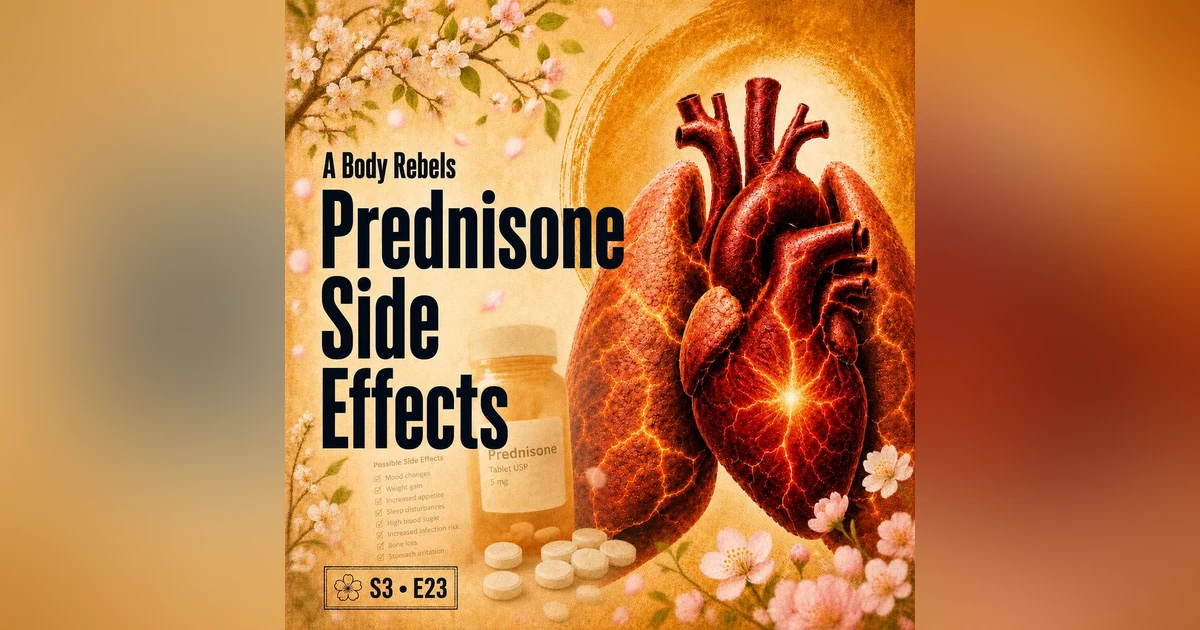


Sometimes it is not the big symptoms that stop you in your tracks. It is the quiet ones. The bruises you cannot explain. The skin that tears a little too easily. Living with sarcoidosis and long term prednisone use means learning how your body changes in ways no one really prepares you for. In this episode, I talk about those small but unsettling moments, the kind that make you pause and ask what is happening to me now. Because chronic illness is not just about survival. It is about adapting to a body that keeps rewriting the rules.
This podcast is narrated using an AI voice. The words, reflections, and lived experience are my own.
More info about Sarcoidosis and to donate toward research: The Foundation For Sarcoidosis Research
I noticed it getting out of the shower. Not pain, not anything dramatic, just a mark. Dark, spreading across the back of my leg like I had walked into something hard enough to remember. Except I didn't remember. And I stood there for a second, trying to replay my day like security footage. Nothing. No bump, no fall, no moment where I thought, yeah, that's gonna leave a mark. Just there. Hello, and welcome to Thoughts While Surviving Chronic Illness. I'm Tate. Today I want to talk about the small things your body does that quietly remind you something has changed. Because it's not always the big diagnoses that get you. Sometimes it's the little strange things that show up uninvited, like bruises. Or skin that doesn't quite behave the way it used to. I've been noticing more of them lately. Marks that seem to appear out of nowhere. Not huge dramatic injuries, just these random reminders that my body is doing something behind the scenes that I didn't sign off on. And at first, you brush it off. You tell yourself, maybe I bumped into something and didn't notice. But then it keeps happening. And after a while, you stop brushing it off and you start asking questions. I had a procedure recently, nothing unusual for me at this point. I V in the hand, bandage over it, the usual routine. They put the bandage on, left it there most of the day, then swapped it out before I went home. Normal. Except later that night, when I took that second bandage off, it took skin with it. Not a little irritation, not redness, skin. And I remember just standing there, holding the bandage, thinking, well, that's new. That's not something that used to happen. And that's the moment where it's just from curiosity to, okay, what is going on now? So I brought it up to my doctor, showed him the bruises, told him about the skin, and he looked at it in that calm, clinical way doctors do when something surprises you, but not them. He said, the bruising, that's likely the eloquence. Blood thinners make that more common. Which fine, that tracks. But then he added something else. The skin. That's probably the prednisone. And not just the prednisone, the length of time. Twenty years. Twenty years on a medication that has quietly been changing things the whole time. He said it simply. And I nodded like, okay, information received. But internally, you're doing that thing where you scroll back through your own life and realize this didn't happen overnight. This has been building. Slowly. Quietly. Like most things with chronic illness. And the strange part is nobody really prepares you for this version of it. You get told about the big side effects, the ones that sound serious and measurable and easy to put on a chart. But not this. Not the moment where a bandage becomes a problem. About the moment where your own skin feels more fragile than it used to. And there's something about that kind of change that hits differently. Because it's visible. It's right there. You can't ignore it. You can't rationalize it away. It's your body saying, hey, we're not the same anymore. And you have to decide what to do with that. Do you panic? Do you get angry? Do you laugh a little and go, well, add it to the list? For me, it's usually a mix. A little frustration, a little dark humor, and a quiet kind of acceptance that I didn't exactly choose, but I've learned how to live with. Because when you've been dealing with something like sarcoidosis for this long, you start to understand that the journey is not just about the disease itself. It's about everything that comes with managing it. The medications. The trade-offs. The long-term effects that don't show up in the first year or the fifth, but eventually make their presence known. And after a while, you start to notice patterns. You start to recognize that every solution carries something with it. Every treatment gives something and takes something. And you don't always get to choose which side of that equation shows up on any given day. But here's the thing: you also start to adapt. You become more aware of your body, more careful, maybe, more patient, whether you want to be or not. And you learn to live in this space where nothing is entirely predictable, but somehow you keep going anyway. Because what's the alternative? You stop noticing. You stop paying attention. And that's not really an option. So instead, you adjust. You take it one strange symptom at a time. One unexplained bruise. One moment where your body reminds you that it's been through something, even if you don't remember exactly when. And you keep moving forward. Not perfectly. Not without frustration. But forward. And that's one of the strange things about living with illness. On paper, it may be called rare, but once it shows up in your body, your lungs, or your heart, it stops feeling rare pretty quickly. Sarcoidosis is only rare until you're the one living with it. I'm Tate, and this is Thoughts While Surviving Chronic Illness. Thanks for being here. If this one hit a little close and you want to send a quick thought, there's a text link in the show notes. I'll see it and can reply, but I only see the last few digits of your number. And for anything longer, the contact form on my website is the better place to reach me. And if you enjoyed this podcast, please rate, review, and share it. New episodes drop every Tuesday and Friday. So until next time, stay safe, be happy, and most of all, keep breathing.