Love, Caregiving, and Chronic Illness: The Spouse Who Helps You Survive
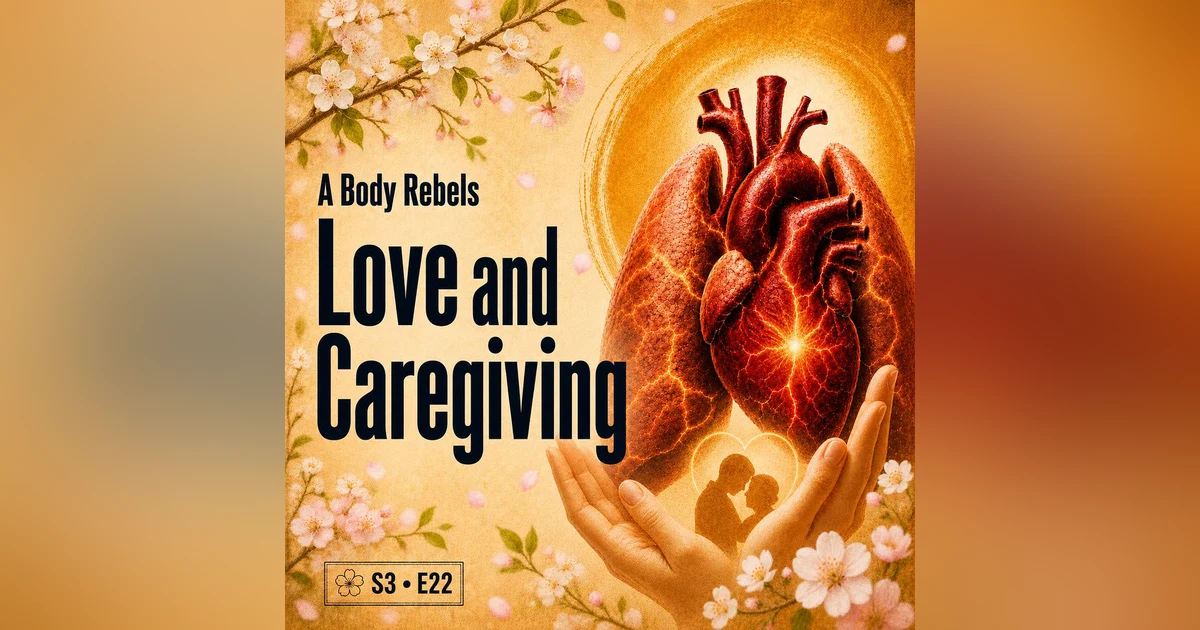


Living with chronic illness affects more than the person with the diagnosis. It changes marriage, caregiving, routines, fear, and the quiet emotional work shared inside a home. In this episode, I reflect on sarcoidosis, heart failure, love, caregiving, and the spouse who has helped me survive the hardest parts of my life. This is a personal story about marriage under pressure, the unseen weight caregivers carry, and the kind of love that notices breathing, fatigue, fear, stubbornness, and hope without turning any of it into pity. For anyone living with chronic illness, or loving someone who is, this episode is about being held through it.
This podcast is narrated using an AI voice. The words, reflections, and lived experience are my own.
More info about Sarcoidosis and to donate toward research: The Foundation For Sarcoidosis Research

I've had enough moments where a room went quiet for the wrong reason. Enough appointments where nobody smiled until the very end. Enough days where my body seemed to be taking instructions from a badly trained raccoon that I probably should be a far more dramatic person than I am. Hello, and welcome to Surviving with Chronic Illness, life in a body that rebels. I'm Tate. Today I want to talk about the kind of love that helps a person survive chronic illness and the spouse who carries more of that weight than most people ever see. I get messages from people who read my story, and they're always kind, really kind. Some people tell me they can't believe everything I've lived through. Some ask how I've managed it. Some offer prayers, encouragement, or a few plain words that arrive at the exact right time. I appreciate every bit of that, because kindness is never small. Even when it comes in a short message from someone I've never met. But when people tell me how hard my life has been, part of me always pauses. Not because they're wrong. I've been through enough medical nonsense to make a chart look like it needs its own therapist. Sarcoidosis, heart failure, scans, procedures, medications, side effects, fear, uncertainty. The daily insult of living in a body that occasionally behaves like it was assembled with spare parts and questionable supervision. So yes, it's been hard. But I don't believe enduring illness comes with a scoreboard. There's no cosmic ranking system where one person gets placed above another because their diagnosis sounds scarier, or their scan report uses more alarming language. Pain is personal, fear is personal, limits are personal. What looks manageable from the outside can feel impossible from inside your own ribs. So when people look at my life and call me strong, I understand what they mean. I'm grateful for it. I also know strength is rarely a solo act, no matter how much we like to dress it up that way. There's no version of my story where I'm still here without my wife. None. Long before the diagnoses, before specialists started colonizing my calendar, before I had to learn the word sarcoidosis and say it casually, like it didn't sound like a gloomy duke from a Victorian novel, she was already there, loving me, believing in me, standing beside me when life was ordinary. And ordinary life does not get enough credit. Crisis gets the dramatic lighting. Crisis gets the music, the trembling voice, the big speeches. But ordinary life is where love proves itself. It's the bills, the dishes, the errands, the quiet car rides, the mood in the room when neither of you slept well, the small decisions that reveal whether someone is truly with you or just nearby. Anybody can look noble for a few minutes when life is on fire. Real love is who stays when the fire is out and the smoke smell is still in the curtains. My wife stayed. She stayed when I was scared. She stayed when I was angry. She stayed when I was tired in a way sleep couldn't fix. She stayed when my body made our life smaller than either of us wanted. She stayed when appointments interrupted plans, when medications changed my moods, when fear sat at the table with us during dinner and acted like it had been invited. I'm proud that I've kept going. I'm proud that I've fought hard. I do believe hope helps. I believe laughter helps. I believe deciding to show up for your life, even when your body is being a complete fool, is no small decision. But I'd be lying if I made it sound as if I created all that courage by myself, like some handcrafted artisanal survival product made in small batches. My strength has been fed by love. Protected by love. Corrected by love, too, which is less poetic but extremely necessary. Because chronic illness doesn't stay neatly inside the person with the diagnosis. It spills into the marriage. It changes the mood of the house. It changes how plans are made, how plans are canceled, how silent sounds, how tired one person can look before the other person starts watching too closely. I'm the one with the symptoms. I'm the one taking the pills, going for scans, feeling the fatigue, managing the breathlessness, dealing with the fear that comes when your body has already proven it can betray you without asking permission. But I'm not the only one living with the consequences. My wife has had to watch. Watch my face. Watch my breathing. Watch my energy. Watch the small shift in my voice. What I'm trying to pass myself off is fine, which, for the record, has not always been my finest performance. I can be very committed to looking fine. Unfortunately for me, she knows my face. That kind of watching takes a toll. It doesn't make noise. It doesn't look heroic from the outside. Nobody gives medals for standing in the next room and listening for the sound of distress. Nobody applauds the spouse who learns the difference between a tired sigh and a worried pause. But that is work. Real work. The kind that lives in the chest. And then there's the impossible balancing act. If she steps in too much, I might feel managed. If she steps back too much, she might worry she missed something. So she has to judge when to help, when to wait, when to push, when to let me keep my dignity, and when to look at me with the kind of expression that says, with great affection. Absolutely not, sir. Sit down before I have to become unpleasant. She has earned the right to launch a slipper at me like a guided domestic missile more times than I care to count. What amazes me is how well she walks that line. She doesn't smother me, she doesn't disappear, she isn't cold, and she isn't controlling. She finds that narrow place where love feels protective without taking over. That's rare. It takes patience, restraint, and a level of emotional intelligence I admire even when I'm the stubborn fool testing it. Caregiving inside a marriage can get described in polished language, as if it's all gentle lighting and noble size. It's not. It's human. It's repetitive. It's inconvenient. It's two people trying to keep a life together while one body keeps adding complications to the schedule. Illness is not dignified all the time. Let's just tell the truth. Chronic illness will have two grown adults discussing blood pressure, swelling, oxygen, medication timing, bowel habits, and whether I look weirdly pale with the seriousness of a hostage negotiation team. Add prednisone to the mix, and suddenly one wrong sentence can turn the living room into international waters. My wife has lived through those moments too. She has loved me through the fear, through the exhaustion, through the frustration, through the versions of me I probably would have tried to return without a receipt. She has let me feel strong without pretending I was never vulnerable. She has supported me when I knew I needed it, and corrected me when I was being foolish enough to pretend I didn't. That kind of love is not automatic just because two people are married. Marriage gives you the structure. It doesn't magically create safety. Safety is built day by day, conversation by conversation, apology by apology, quiet kindness by quiet kindness. She became the person I can fully confide in because we built that trust over time. I can say the frightening part out loud with her. I can say when I'm scared. I can admit when I'm tired of being brave. I can be quiet and still be understood. That changes the experience of being sick. It doesn't make the illness easy. It doesn't turn scans into a hobby or waiting rooms into charming little outings. But it means I'm not carrying the whole weight alone. Chronic illness can isolate you even when people love you. They may care deeply and still not understand the shape of your day. They may mean well and still say something so unhelpful, you have to decide whether to explain yourself or simply blink at them until the moment passes. But having one person who knows the spoken words and the unspoken ones changes the room. My wife knows when I'm joking because I'm actually okay, and when I'm joking because humor is the only tool within reach. She knows when I need comfort. She knows when I need a nudge. She knows when I need to stop acting like I'm made of cast iron and sarcasm. And she knows when I need to be left alone for a minute without being abandoned. That distinction is love. There are days when love looks like big emotional support. There are other days when it looks like noticing I'm breathing differently, or asking one careful question, or not asking anything because she can see I don't have the energy to answer. Sometimes it's a ride to an appointment, sometimes it's a hand on my shoulder. Sometimes it's her looking at me across a room and reading my face better than I can read it myself. People talk a lot about resilience in chronic illness spaces, and I understand why. We need grit, we need perseverance, we need whatever inner engine keeps us getting up after another bad night, another strange symptom, another medical letter written in the emotional tone of a parking ticket. But survival can sound too individual when we talk about it that way, too tidy, too much like one person clawing through by force of character and impressive hydration. Most of us are held up by someone a spouse, a partner, a parent, a friend, a child, a sibling, someone who notices, someone who stays, someone who keeps showing up when illness has made us tired, limited, frightened, irritable, or all four before lunch. The myth of total self-sufficiency is nonsense. Love keeps people alive, not instead of medicine, of course. I have enough specialists involved in my life to host a very stressful dinner party. Medicine has kept me here. Procedures have kept me here. Devices and scans and prescriptions have all played their part. But love changes what survival feels like. Love reminds me that I'm still a whole person, not just a chart, a scan, a diagnosis, a risk category, or a body behaving badly in public again. I've had plenty of medical language attached to my life. Sarcoidosis, heart failure, warnings, numbers, test results, the serious faces doctors make when they're choosing words carefully. But none of that tells the full story of why I'm still here and still myself. The rest of the story is her. Her love. Our love. The steady kind, the stubborn kind, the kind that stays when life gets ugly and frightening and inconvenient and repetitive. The kind that doesn't need applause because it's too busy doing the work. So if you live with chronic illness and there's someone walking beside you through it, really walking beside you, I hope you're able to see them too. Not because your pain is small, it isn't. Not because your exhaustion is less important, it isn't. But because the person loving you through this is carrying something real. The worry. The restraint. The private fear. The long emotional labor of trying to stay steady when the person they love is not okay. That deserves to be named. Not with guilt, not with some grand performance of gratitude that turns into another burden, just with tenderness, with a look, with a thank you, with the recognition that care has weight, even when it's carried quietly. As for me, I know exactly who that person is. My wife. My beautiful wife, my best friend, my safe place, my witness, my teammate, my protector, the one who has stayed in body and spirit, in ordinary hours and frightening ones, in laughter and fear, in calm days and days when my body decided to improvise without clearance. She has loved me when I was easy to love and when I was absolutely not. She has loved me through uncertainty, steroid moods, stubborn moments, frightened moments, and the parts of me I don't always know how to soften. She has loved the whole of me, not just the polished version I'd prefer to present to the world. That humbles me. Not pity. Not obligation. Not endurance wearing a romantic costume. Love. Real love. The kind that stays when the room gets quiet for the wrong reason. The kind that listens for my breathing without making me feel watched like a patient under glass. The kind that lets me be scared and still treats me like myself. When I look at my life, medically overcomplicated and battered as it may be, I can still say I'm a blessed man. Not because the illness has been gentle, it hasn't. Not because fear skipped my house, it didn't. But because I have been loved through it by someone who knows the cost and stayed anyway. I don't know how to make that sound bigger without making it sound false, so I'll keep it plain. My wife has helped me survive, and my life is better, safer, funnier, steadier, and more possible because she's in it. I'm Tate, and this is Surviving with Chronic Illness, life in a body that rebels. Thanks for being here. You're welcome to send me short personal messages through the text link. I can read and reply, but only the last digits of your number are visible to me through that link. For longer messages, please reach me through the website. And please know I'm not able to respond to solicitations, sales offers, guest pitches, or promotional outreach. And if you'd like to do something tangible to help people living with sarcoidosis, please consider making a donation to the Foundation for Starcoidosis Research, or FSR, at stopstarchoidosis.org. I'll also put a link in the show notes. And if you enjoyed this podcast, please follow the show, share it, and leave a review on Apple Podcasts. New episodes drop every Tuesday and Friday. So until next time, stay safe, be happy, and most of all, keep breathing. And remember, sarcoidosis is only rare until you're the one living with it.