The Bad Day I Fear Won’t End: Chronic Illness and an Uncertain Tomorrow
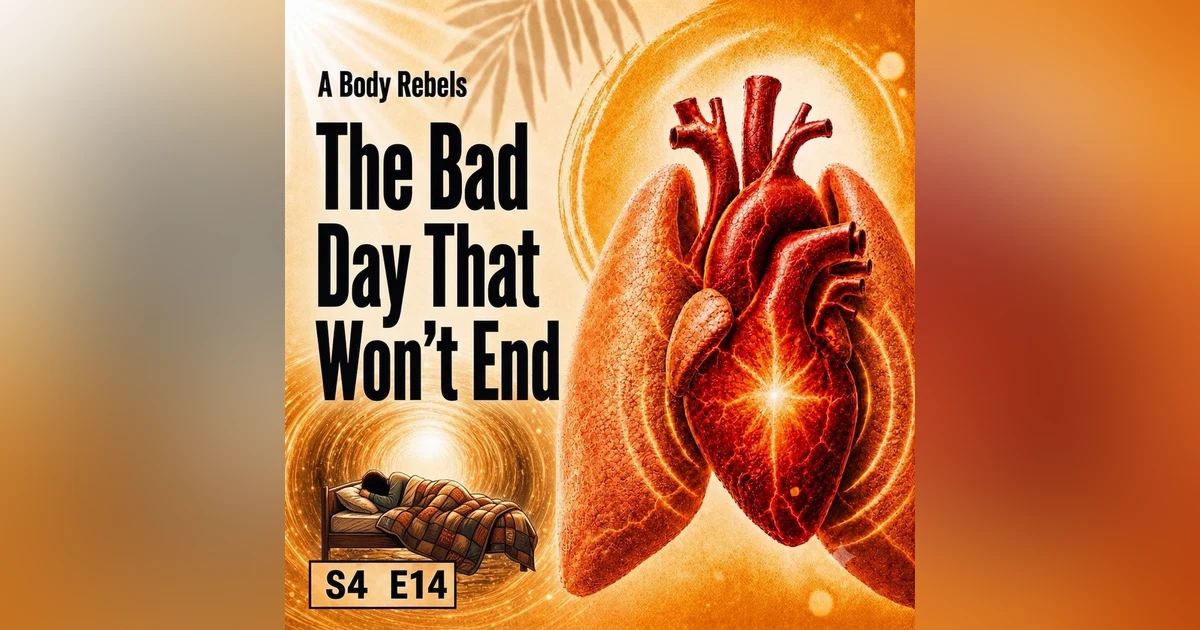


When a chronic illness flare sends me back to bed with oxygen, physical exhaustion can quickly become fear about my future. I start wondering whether I’ll recover or whether my independence is slipping away permanently. I used to hide those fears from my wife because I thought I was protecting her. Now I understand that honesty means trusting her and remaining honest with myself. In this episode, I confront uncertainty, physical decline, and the frightening question of whether one terrible day could become my new reality.
This podcast is narrated using an AI voice. The words, reflections, and lived experience are my own.
More info about Sarcoidosis and to donate toward research: The Foundation For Sarcoidosis Research

My oxygen tubing catches against the corner of the bed as I lie down, too depleted to untangle it. A few hours earlier, I thought I had enough energy to make it through the day. Now breathing takes more effort. My body feels emptied out. And one question is louder than everything else. What if this is the day I don't recover?
SPEAKER_02It's a body reverse. Where the truth gets told, truth gets told. About medical text to ease. I'm going on. With a little dark humor. And a whole lot of fit. When it's body.
SPEAKER_00Welcome to A Body Rebel. I'm Tate. This podcast shares my personal experiences and is not medical advice. Please speak with your own provider before making medical decisions. The voice you're hearing is AI because illness makes speaking difficult. But the writing, memories, opinions, and experiences are mine. In this episode of A Body Rebels, a chronic illness podcast, I'm confronting the fear that an ordinary bad day might become the day my life changes permanently. I usually know what I'm supposed to tell myself when my body shuts down. I've been here before. I've survived bad days before. I need to stop fighting, put on my oxygen, and give my body time to recover. Tomorrow may be better. Most of the time that's what happens. I lie down, I let go of whatever I thought I needed to accomplish. Eventually, enough strength returns for me to get moving again. But underneath that practical thinking, another question waits. How many more days do I have when I can still make it through an entire day? That question scares the hell out of me. I have lived with sarcoidosis for 20 years. During that time I've had to become honest about what my body can and can't do. My capacity isn't what it once was, and pretending otherwise only makes the consequences harder. Paying attention to my limits has helped me survive. I've learned that I can't keep demanding the performance of the body I had 20 or 30 years ago. Knowing that doesn't make the change easy to accept. Sometimes my world feels as though it's shrinking. The amount I can accomplish gets smaller. The energy available to me disappears sooner. The horizon I can reach seems to move closer. On a relatively good day, I can adjust to that reality. I can pace myself, change my expectations, and work with what I have. On a bad day, the shrinking becomes impossible to ignore. I can begin the morning believing I'm capable of handling everything in front of me. Then, without much warning, I'm finished. My energy is gone. Breathing is harder. My emotions sink alongside my physical strength. Before I know it, I'm in bed with oxygen, feeling physically depleted and emotionally flattened. I'm no longer thinking about what I wanted to finish that afternoon. I'm wondering whether I've crossed another invisible line. The thought that follows is painfully simple. I hope I make it out of this. Pushing through has been part of the way I've lived with illness for a long time. I keep going. I do what needs to be done. I try not to surrender more of my life than I absolutely have to. That determination has served me well, but it can also turn against me. Sometimes I fight the need to rest as though rest itself were the illness winning. I bargain with myself. I decide I can finish one more thing. I tell myself that lying down is weakness. Even when lying down may be the only reason I recover. The hardest part is that I usually do recover. Usually. That one word carries an enormous amount of weight because it leaves room for the possibility I'm afraid to name. A day may come when I lie down to recover and don't return to the level of independence I had before. I don't necessarily mean that I'll die that day. I mean my capacity may change permanently. I may not regain what I lost. The life I recognize is mine may become different in ways I can't reverse. That possibility scares me more than I normally admit. There was a time when I kept much of that fear to myself. My wife already lived with the uncertainty of my illness. She already knew there might come a time when I couldn't do what I do now. I knew she carried fears of her own, and I convinced myself that hiding mine was a way of protecting her. I believed my determination helped her. When I kept moving forward and responded as positively as I could, I thought I was giving her something steady to hold on to. That belief made honesty complicated. I softened what I said. I turned pain into a joke. I said I was tired when I was actually frightened. I said I needed a little rest when I was privately wondering whether my body was changing permanently. Sometimes I said I would be fine because I could see the fear on her face, and I couldn't bear to add more to it. Eventually I realized that wasn't protection. By deciding what she could and couldn't handle, I wasn't fully trusting her. I was treating my fear as something she needed to be shielded from, instead of trusting her to choose how she would meet it. The truth is, I think she handles my fears better than I do. I don't hide those things from her anymore. I tell her when I'm frightened, I tell her when a bad day feels different. I tell her when my mind starts turning a few difficult hours into a prediction about the rest of my life. Being honest with her helps me remain honest with myself. If I hide the fear from her, I can start hiding it from myself too. I minimize it, I rename it, I bury it beneath determination and pretend that pushing forward means I'm not scared. But I can be determined and frightened at the same time. I can tell my wife the truth without making that truth her responsibility to fix. I can trust her to hear what I'm carrying, just as she trusts me to hear what she carries. That honesty hasn't made either of us weaker. It has given us a clearer understanding of where I am, what I'm feeling, and what I need. It has also changed the meaning of strength for me. Strength isn't acting untouched by the possibility of decline. It isn't forcing a smile while quietly imagining the worst. It isn't deciding that every frightening thought must remain locked inside my head. Sometimes strength is looking at my wife and saying, I'm scared this time. Sometimes it's admitting that a bad day feels different, even when I can't explain why. Sometimes it's allowing her to respond without deciding in advance that my honesty will be too much for her. She is the person I trust to be there. Trusting her presence while hiding my experience from her wasn't complete trust. I can see that now. Saying the truth out loud once felt dangerously close to admitting defeat. One day my capacity may come to a grinding halt. Even saying that is difficult. Part of me still reacts as though acknowledging the possibility invites it into my life. Fear can feel like prophecy the moment it leaves my mouth. But naming a fear doesn't create it. Acknowledging uncertainty doesn't mean I've surrendered to it. Speaking honestly doesn't mean I've stopped fighting. Now I understand that trusting my wife with the truth is also part of trusting myself. During the conversation that led me to this episode, I said something simple. Be strong and think of today. Live for today. That's all I can do. When I heard myself say it, I felt something release in my chest and solar plexus. My body reacted before my mind had time to examine the words. It wasn't a promise that everything would be fine. It wasn't a guarantee that I would always recover. It wasn't a demand to remain positive every second of every day. It was simply a reality I could live with. Today is what I have. Today is what I can work with. Today is where my life is actually happening. Tomorrow may bring more strength. Tomorrow may bring less. Tomorrow may surprise me in either direction. Spending today trying to pay the emotional cost of every possible tomorrow doesn't protect me. It only takes away the life I still have now. Worry can feel like paying a debt I may never owe. I can spend hours imagining that I'll soon become completely incapacitated. But I don't know that. My condition may change gradually. It may change suddenly. My current level of independence may last for decades. I may remain capable of doing many things until shortly before the end of my life. I may live into my 90s. I don't know exactly how my story will unfold. Chronic illness makes that uncertainty harder for me to ignore, but it doesn't give me a crystal ball. My brain can take one terrible day and present it as evidence of my entire future. It can turn exhaustion into a prediction. It can take a few hours in bed with oxygen and whisper that I'm witnessing the beginning of the end. Sometimes my brain is trying to protect me. Sometimes it's trying to prepare me. Sometimes, quite honestly, my brain is just messing with me. That's when I need a reset. For me, meditation helps. I often practice jappa meditation, repeating a mantra and allowing my mind to settle around it. The fear doesn't always disappear. My body may still feel terrible. My circumstances may not change at all. Meditation interrupts the story my mind has built around the moment. It creates a little space between what is actually happening and what I'm predicting. Right now, I may be exhausted. Right now, I may need oxygen. Right now, I may need to stop. None of that automatically means I'll never get up again. I also know that my experience has limits. I don't live with clinical depression, and when I enter a dark emotional place, I can usually find my way back out. That doesn't make me stronger than I would be if my mind worked differently. It means I know my own circumstances and the tools that have helped me so far. Positive thinking, willpower, and meditation aren't universal solutions. If I ever reach a place where my usual tools no longer help, I will need something more. I imagine the bad day is a mountain. So far, I've usually been able to climb it with the tools I already have. I know where to place my feet. I understand the importance of pacing myself. I trust that if I move carefully, I can eventually reach the top and walk down the other side. But I may need ropes one day. I may need a pickaxe. I may need a guide who understands the terrain. I may even become stranded somewhere. I can't climb out of alone. If that happens, there will be no shame in being rescued. No shame. If I reach a point where I don't believe I can make it over the mountain, I need to call someone I trust. I need to tell the truth about where I am and allow that person to help me find the next safe step. My goal isn't to prove I can survive everything alone. My goal is to survive. Sad days are part of my life. I don't like that reality, but I understand it. When I'm trapped inside one, I try to remember that I've been there before. I've stepped outside again. I've crossed the hill. I've made it over the mountain and walked down the other side. There may come a time when I need more help doing that. There may come a time when the path changes. I don't have to live that day before it arrives. Today, I can listen to my body. Today I can rest without calling it failure. Today, I can admit I'm scared without calling it surrender. Today I can be honest with my wife and trust her to decide what she can handle. I know what it's like to lie in bed with oxygen and wonder whether this is the bad day that won't end. I know what it's like to question how many full days I have left in me and to feel frightened by my shrinking capabilities. I can't promise myself that every day will get better. But I can refuse to turn one bad day into a verdict on the rest of my life. Living for today isn't denial. It isn't pretending. It isn't toxic positivity. It's my decision not to suffer every possible future before I get there. Maybe tomorrow I'll wake up feeling stronger. Maybe I'll still need to rest. Maybe I'll need help. Whatever tomorrow brings, I'll meet it when it arrives. For now I'm here. I'm breathing. I'm listening to my body. And I'm still moving forward. Even when moving forward means lying still long enough to recover. I'm Tate. Thanks for sharing this time with me. Until next time, take care of yourself. Keep breathing, and remember, sarcoidosis is only rare until you're the one living with me.