Grief and Chronic Illness: Remembering My Dad Through His Humor
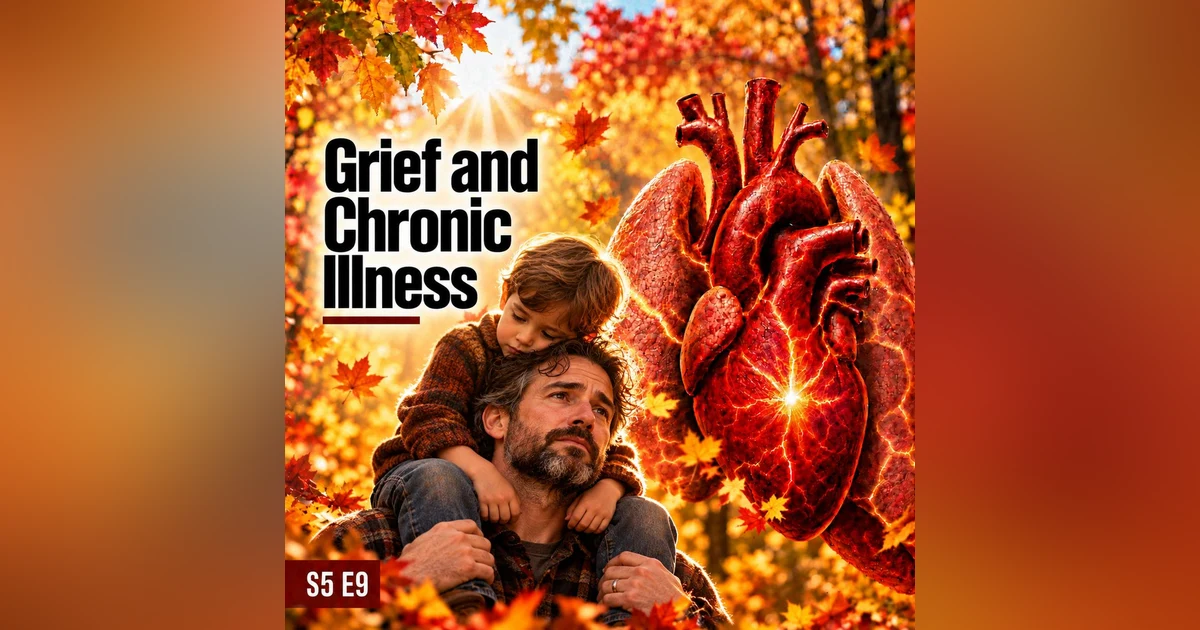


My dad’s birthday is coming up, and I’m remembering the humor, presence, and ordinary pleasures of the father I lost when I was thirteen. He lived with Type 1 diabetes and heart disease, and after twenty years with sarcoidosis and my own experience of heart failure, I understand parts of his life differently. From an airport breakfast to a midnight disco, these memories bring me closer to the father I miss and the grown man I wish he’d had time to know.
This podcast is narrated using an AI voice. The words, reflections, and lived experience are my own.
More info about Sarcoidosis and to donate toward research: The Foundation For Sarcoidosis Research
My dad once answered a question I've never forgotten. I asked whether he'd killed anyone during the war. He said he couldn't remember. I was a child. I heard the answer without knowing what to do with the silence around those words. Years later, I'm still thinking about the man who said them and how much of his life I understood only after losing him.
SPEAKER_00Where the truth gets told. And a whole lot of grip. When it's by throws attention.
SPEAKER_01Welcome to A Body Rebels. I'm Tate. This podcast shares my personal experiences and is not medical advice. Please speak with your own provider before making medical decisions. The voice you're hearing is AI because illness makes speaking difficult, but the writing, memories, opinions, and experiences are mine. With my dad's birthday coming up, I'm remembering his humor and how my own experience of chronic illness has changed my understanding of him. My dad died in 1975. He was 54. I was 13. Those numbers haven't changed, although my understanding of them has. So did his humor. He fought in Italy during World War II with the Canadian Army. As a child, I knew those facts without understanding the life behind them. War belonged to an earlier time. My dad belonged to our house. I hadn't learned how both existed inside the same person. When I asked whether he'd killed anyone, I wasn't considering how the question might land. I wanted an answer. He said he couldn't remember. I remember his response as quiet, almost flat. I don't know what lay behind those words. I have no way to ask him now. Age has given me a greater awareness of what someone might carry home from war, but awareness doesn't give me access to his memories. I wonder whether some of his roughness had roots I never understood. I also resist explaining every part of him through something he never discussed with me. He deserves more than my guesses. What I know is how funny he was. Practical jokes, mischief, humor which changed the feeling in the house before I'd worked out what he was doing. He wasn't performing for an audience. He was being himself. I recognize some of him in my own sarcasm, especially when illness or medical paperwork has exhausted my patience. A ridiculous situation arrives, and somewhere beneath the irritation, a joke starts forming. Some families passed down silverware. Apparently, mine passed down humor as emergency equipment. I appreciate the inheritance. My dad lived with type 1 diabetes and took insulin every day. He also had high blood pressure and heart disease. As a child, I knew he had illnesses. I didn't understand how much attention living with them demanded. His health belonged to the grown-up business happening around me. I saw my father. I didn't see every calculation behind his day. Now, I've lived with sarcoidosis for 20 years, and I live with heart failure too. I understand how much of a person's effort stays out of sight. A day has barely begun, and my body already has a say in the plans. Energy, breathing, sleep, the amount I feel able to manage. Ordinary decisions arrive with extra considerations. Even when I'm doing something enjoyable, the health concerns don't disappear on command. Looking back, I wonder how often my dad carried similar interruptions while I saw only the joke, the work, or the family outing. I wish I'd known enough to ask. I wish I'd had the chance to hear him describe an ordinary day from inside his own body. One memory I love involves my parents disappearing early one morning without telling us children where they were going. They went for a picnic breakfast by the airport runway to watch planes take off. I love the simplicity of their decision. Breakfast was happening somewhere different. They wanted to watch the planes, so they went. The outing itself is enough. Two adults with responsibilities and health concerns making room for something they enjoyed. As their child, I knew them mainly as my parents. A breakfast by a runway reminds me they had a life together beyond looking after us. They enjoyed each other's company. They had their own ideas about a good morning. Then there's the midnight disco. He was around 50. My mother was around 40. They went out dancing at midnight. Midnight. My lungs hear the word and request a meeting with management. But I love remembering them going. I don't know how he felt physically before leaving, or what the following morning was like. I won't turn one night out into proof of endless energy. I know they went dancing. I know the memory still makes me smile. Their lives included illness, work, and responsibility. Their lives also included a disco. When I remember him, I want room for both. I feel strongly about this because my own medical history takes up so much space. Sarcoidosis and heart failure matter. They influence my days. They belong in the story. So do my wife, my humor, my opinions, and the things I enjoy. I don't want every memory of me filed under a diagnosis. My dad's laughter reaches me more readily than a list of his conditions. His illnesses were real. So was the pleasure he brought into our home. Then came the day he died. He took his motorbike for a ride down a mountain, and the bike stalled. There was no cell phone to call home. He pushed the motorbike back uphill to the road. That night, he died of a massive heart attack. I watched him die. I have no softer way to say those words. At 13, I understood he was gone. I didn't understand how his absence would follow me through ages and experiences I hadn't reached. I lost the father I knew as a child. Later, I began missing conversations I'd never had with him. Conversations between two grown men. I wanted to ask about his marriage, his work, his health. I wanted to know more about his life before becoming my dad. I wanted to hear what he thought about the person I'd become. My own illness brought another set of questions. How did he feel about depending on medication every day? Did he resent the attention his body demanded? How much did he tell my mother? And how much did he keep to himself? I don't have those answers. Remembering his humor doesn't fill in the gaps. Laughter tells me something about him, but never everything. I know from my own life how easily a joke sits beside fear or frustration. Someone hearing me laugh isn't hearing every thought I've had during the day. I wish I'd known him long enough to hear more. His birthday is coming up. There's something about seeing the date approach which brings him closer again. I know how many years have passed since he died. I know how long I've lived without him. Knowing doesn't remove the ache. A birthday also makes me think about age differently. He died at 54, so every birthday of his now carries the strange arithmetic of imagining how old he would have been. Sometimes I miss him as the 13-year-old who wanted his dad back. Sometimes I miss him as the grown man who understands how young 54 was. Those feelings arrive together. I also feel gratitude. Although gratitude never settles the matter. Being thankful for him doesn't make losing him acceptable. I'm grateful he was my father, and I wish we'd had more time. I no longer feel a need to make those thoughts agree. There are things I wish I'd thanked him for while he was alive. At 13, I didn't have the language, and I assumed there would be later. I wish I'd thanked him for showing up, for becoming my father through the ordinary work of being present, for the jokes I still remember, and the habit of finding humor when a day grows difficult. I wish I'd told him how much his affection mattered, even when he was rough around the edges. I've spent years learning how to live with a body which requires more attention than I want to give. During those years, my understanding of him has grown. I see effort where I once saw routine. I appreciate an outing I once regarded as another story about my parents. I recognize how much a person might carry while everyone around them continues with an ordinary day. None of this turns him into a lesson. He was my dad, living his own life. He didn't know I would spend decades looking back through experiences he never lived long enough to share with me. I don't want to make his early death the explanation for everything he was. He had a life before his final night. A marriage, children, work, humor, a history I knew only in pieces. When I remember the airport breakfast or the midnight disco, I'm remembering him alive. I need those memories, alongside the hardest one. There's still sadness in speaking about him. There's affection, too, and amusement. I hear about the disco and smile before the grief catches up. After all these years, I wish I had one more conversation. I'd tell him I understand more now. I'd tell him I still recognize his humor in mine. Then I'd want to stop talking long enough to hear him, without rushing past anything because I assumed we had another day. This is A Body Rebels. I'd love to hear from you. Write to me with your thoughts on the podcast, the topics or issues you'd like me to discuss, or a story from your own life. With your permission, I might share your story in a future episode. To send me a message or leave a voicemail, visit abodyrebels.com. I'm Tate. Thanks for sharing this time with me. Until next time, take care of yourself, keep breathing, and remember, sarcoidosis is only rare until you're the one living with it.