Chronic Illness and Marriage: How Sarcoidosis Changed Our Lives
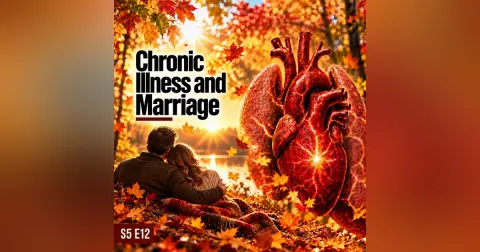


I’ve lived with sarcoidosis for twenty years, but my wife has lived with its consequences alongside me. After forty-five years together, I’ve begun thinking about everything chronic illness has changed in our marriage, including the freedom we once enjoyed, the plans we abandoned, and the sacrifices that never appear in my medical records. This episode explores the quieter cost of chronic illness on a relationship, and why I believe my wife’s experience deserves to be recognized as much as my own.
This podcast is narrated using an AI voice. The words, reflections, and lived experience are my own.
More info about Sarcoidosis and to donate toward research: The Foundation For Sarcoidosis Research

Five hours of my life are missing. That's how long my open lung biopsy lasted. For me, those hours disappeared under anesthesia. I closed my eyes, and when I woke up, the operation was over. For my wife, those same five hours had to be lived minute by minute. I was the patient. I was the one having surgery. But when I think about that day now, I find myself thinking less about what happened to me and more about what those five hours must have been like for her. There's an entire side of chronic illness that never appears in the patient's medical records. And sometimes I think it's the side that gets overlooked the most.
SPEAKER_01It's a body rebirth where the truth gets told. With a little dark humor, and a whole lot of grief.
SPEAKER_00Welcome to A Body Rebels. I'm Tate. This podcast shares my personal experiences and is not medical advice. Please speak with your own provider before making medical decisions. The voice you're hearing is AI because illness makes speaking difficult, but the writing, memories, opinions, and experiences are mine. This episode is about how sarcoidosis and heart failure have changed my marriage, the life my wife and I expected to share, and the sacrifices that don't always get acknowledged. Forty-five years is a long time to spend with another human being. Long enough to know each other's habits, preferences, and peculiarities. Long enough to recognize a mood from the way someone closes a cupboard or walks into a room. My wife and I have spent our entire adult lives together. She's my best friend, my favorite person to be around, and the woman I would still choose to spend an afternoon with, even if we had absolutely nothing planned. That was true long before sarcoidosis entered our lives. And I think that's important. Sometimes chronic illness becomes such a dominant part of a relationship that it's difficult to remember the people who existed before it. But our marriage wasn't built around illness. We had a life. We had routines, arguments, laughter, interests, and plans for the future. We enjoyed traveling, taking long drives, and making decisions without consulting a list of medical considerations. When we were younger, we could simply decide to go somewhere. The question was where we wanted to go. Today, the questions are considerably more complicated. How much walking will be involved? Will there be somewhere to sit? How long will we be away? Will my oxygen supply be sufficient? Will I have enough energy to enjoy the outing? And perhaps the most frustrating question of all, will I feel well enough when the day finally arrives? I've lived with sarcoidosis for 20 years. Heart failure has been part of my life for much of that time. Over those years, I've had to adjust my expectations about what I'm physically capable of doing. What took me longer to recognize was that my wife had to adjust hers as well. When a person develops a serious illness, the medical attention quite naturally focuses on that person. I understand why. I'm the one undergoing examinations, taking medication, and dealing with the physical consequences. I'm the one undergoing examinations, taking medication and dealing with the physical consequence. I think about my open lung biopsy. Five hours is a long time to wait for someone to come out of surgery. I don't know exactly what my wife did during those hours. I don't know whether she watched the clock, tried to distract herself, or sat quietly with her thoughts. I shouldn't pretend to know what was going through her mind. I only know that while I was unconscious, she was waiting for the outcome of an operation on someone she loved. And it wasn't the only time. There was the procedure to close the hole in my heart, the implantation of my defibrillator, the subsequent replacements, other medical emergencies and hospitalizations. Each event became another chapter in my medical history. For my wife, each was another interruption to the ordinary life we were supposed to be living together. I have discharge instructions, surgical reports, and follow-up appointments. There's no equivalent paperwork describing what those experiences meant to her. Nobody hands the spouse a document explaining how to return to normal after spending hours wondering whether everything will be alright. Once I'm recovering, life begins moving toward the next stage. But I wonder how long the emotional effects of those experiences remain with the person who was waiting. That's something I can't answer for her. And perhaps that's part of the problem. I'm so accustomed to explaining what illness has done to me that I haven't always made enough room for what it has done to her. One of the things I miss most is spontaneity. It might sound like a relatively minor loss when compared with everything else chronic illness can take away, but spontaneity is a form of freedom. I remember being able to get into the car with my wife and drive without having to consider whether the day would become physically exhausting. We could take a detour because something looked interesting, spend longer somewhere because we were enjoying ourselves, change our plans because a better idea came along. There was a wonderful simplicity to it. Today, I can still enjoy a drive, but my health often determines the boundaries. I have to think about my breathing, my stamina, and how long I can comfortably remain away from home. Sometimes I look forward to an outing, only to discover that my body has other plans. And when that happens, my wife's day changes too. I might be the one experiencing the symptoms, but we're both the ones going home early. I've thought about how many little pleasures may have disappeared from our life without either of us formally acknowledging their loss. The unplanned afternoon, the extra stop on the way home, the vacation that becomes too complicated to organize, the invitation that requires more energy than I can reasonably manage. Individually, these things may seem insignificant. Collectively, they change the shape of a marriage. I don't think the hardest losses are always the dramatic ones. Sometimes they're the ordinary things that quietly stop happening. And one day I realize how much I miss them. What troubles me is knowing that my wife has lost access to some of those shared experiences as well. She didn't develop sarcoidosis, yet her freedom to enjoy certain parts of our life has been affected by it. There are also practical changes that don't make particularly interesting stories, although they make an enormous difference to everyday life. Marriage involves work, not just the emotional kind. There's a household to manage, responsibilities to divide, errands to complete, and all the unremarkable tasks that keep life functioning. When my health is relatively stable, I'm able to contribute more. When it deteriorates, that balance changes. Some days, what ought to be an equal partnership feels much closer to 75-25. I have occasionally contributed my expertise in identifying everything that needs doing while remaining spectacularly unavailable to actually do it. A remarkable talent, although not one I recommend putting on a resume. I can laugh about it, but the imbalance is real. When my wife takes on an additional responsibility because I can't manage it, that task requires time. Her time. Time that might otherwise belong to something she enjoys, something she needs to accomplish, or simply an opportunity to do absolutely nothing. I think about that more now. An hour spent dealing with something I would ordinarily handle is an hour she cannot use elsewhere. And those hours accumulate. I can't put a number on them. I can't calculate what they might have added up to over 20 years. But I know they've had a cost. I also know that feeling guilty about them doesn't necessarily accomplish anything useful. Guilt might make me feel miserable, but it won't wash the dishes, finish an errand, or give my wife an afternoon back. What matters is recognizing the imbalance and contributing in whatever ways I reasonably can. I still have a responsibility to our marriage. Illness has changed what I'm able to do, but it hasn't eliminated my responsibility to be a thoughtful husband. There's another aspect of this that I find particularly uncomfortable. I sometimes wonder what my wife's life might have looked like if I had remained healthy. Would we have traveled more? Would we have spent more weekends doing things we enjoyed? Would she have had fewer worries, more freedom, or opportunities that never quite materialized because my health took priority? I don't know. And I have to be careful with those questions. It's easy to imagine an alternative life in which everything would have been wonderful. But healthy people experience disappointments too. Plans change for all sorts of reasons. No marriage comes with a guarantee of uninterrupted happiness. I also don't want to write a story about my wife's feelings without giving her the opportunity to tell it herself. She may not see every sacrifice the way I do. Something that troubles me might be something she accepted years ago. A decision I remember with regret might not carry the same emotional weight for her. I cannot assume that every missed opportunity represents a personal loss in her eyes. Still, I think the questions deserve to be asked. Not because I want reassurance that everything is fine, but because her experience of our marriage matters independently of mine. I know a great deal about the physical consequences of my illnesses. I know considerably less about the private adjustments she's made to accommodate them. That's a different kind of realization. One that asks me to listen rather than explain. I think chronic illness can gradually change the roles people occupy in a marriage. Not through any deliberate decision. It simply happens. One person becomes the patient, the other becomes the person expected to cope. And the longer the illness continues, the easier it becomes to accept those roles as permanent. I don't want that for us. My wife is not simply the woman who accompanies me to appointments or helps me manage difficult days. She's an individual with her own interests, opinions, disappointments, ambitions, and needs. Some of those needs may have absolutely nothing to do with me. And that's perfectly reasonable. I don't want her to feel that every decision has to be evaluated according to whether I'm comfortable, available, or physically capable of participating. There should still be room in our marriage for her to do things simply because she wants to. I want to encourage that without making it another conversation about my health. Because even well-meaning concern can become restrictive. I can appreciate the help she gives me while recognizing that her life shouldn't be organized entirely around providing it. I also recognize that saying this is much easier than figuring out how to make it happen. We've spent years adapting to circumstances that keep changing. There isn't a neat formula for balancing two people's needs when one person's health can be unpredictable. But I think recognizing that imbalance is a necessary beginning. And I can do a better job of asking what she wants rather than assuming I already know. One of the strange things about living with illness for so long is how easily life becomes divided into periods. Before the diagnosis or after the diagnosis. Before a particular surgery, after another medical emergency. I can look back over 20 years and identify events that changed what came afterward. Yet when I think about my marriage, I don't want those events to become the only landmarks. I want to remember the good years that existed before illness. I want to recognize the ordinary happiness that still exists now. And I want to keep making memories that have absolutely nothing to do with hospitals, medications, or medical equipment. Marriage is not supposed to become an endless exercise in surviving the next problem. At least, that's not how I want to spend whatever time we have. After 45 years together, I'm still interested in my wife. I still enjoy her company. I still find her funny, occasionally infuriating, and wonderfully familiar. I suspect she could offer a fairly detailed description of my own irritating qualities, if anyone were foolish enough to ask, and I would strongly discourage that interview. We've been through enough together to know that affection doesn't require a perfectly organized life, but I don't want affection to become something we only express during difficult moments. I don't want romance to be reduced to gratitude for assistance. There are plenty of things I appreciate about my wife that have nothing to do with my medical needs. I love her because of who she is. I loved her before all of this began. And I want that to remain the center of our relationship. I sometimes think about the promises people make when they get married. For better or worse, in sickness and in health. Those words sound beautiful when the future is still largely unknown. I wonder how many couples truly understand what they might eventually mean. I certainly didn't anticipate the extent to which illness would alter our lives. But I also don't believe suffering makes a marriage more meaningful. I wouldn't describe sarcoidosis as a blessing that brought us closer together. We already loved each other. We didn't need heart failure, lung disease, or years of medical uncertainty to prove it. I would gladly return every frightening hospital visit, every abandoned plan, and every restriction my health has imposed on our life. I would trade them for ordinary years. Years when we could travel without elaborate preparation. Years when I could do my share without constantly calculating my available energy. Years when a cough was simply a cough and an unexpected change in plans had nothing to do with illness. That doesn't mean our life has been without happiness. Far from it. It means I can appreciate the marriage we have while still grieving some of the experiences we never got to share. Both feelings can exist together. There's something else I've begun to understand. When I think about the future, I naturally think about my health. How much longer will my lungs cooperate? What will happen with my heart? Will I become more physically limited? Those are questions I've lived with for years. But our future doesn't belong exclusively to my medical condition. It belongs to both of us. My wife has her own hopes for the years ahead. I want to hear them. I want to know what she still dreams of doing, what she misses, and what would make her life more enjoyable. I may not be able to participate in everything. That's a difficult reality to accept. But my limitations shouldn't automatically become the boundaries of her entire world. And when there are things we can still enjoy together, I want us to make the effort. Not because every day needs to become some grand celebration of life. Frankly, that sounds exhausting. Sometimes a pleasant afternoon is enough. A drive through the countryside. A meal together. A ridiculous conversation that goes nowhere. Sitting beside each other without a schedule to follow. The sort of ordinary experiences I once took for granted. I value them differently now. Not because illness made them precious. They were always precious. I simply didn't understand how easily they could become difficult. I began this episode thinking about five hours spent in an operating room. Five hours that I barely experienced, and my wife had to live through, awake. It's one of many reminders that the same medical event can create two very different experiences. I've spent 20 years learning how to live in a body changed by sarcoidosis. My wife has spent those years living beside someone whose health has changed the course of our shared life. Those experiences are connected, but they are not identical. And I don't think hers should be treated as a footnote to mine. I cannot recover the time we've lost or guarantee that the future will be easier. What I can do is remain interested in her life, her wishes, and the things that matter to her. I can recognize that she may have made sacrifices I haven't fully understood. I can try to create more opportunities for us to enjoy being husband and wife, rather than allowing illness to define every part of our relationship. And perhaps most importantly, I can ask her about her experience without assuming that my interpretation is the correct one. Forty-five years together doesn't mean there's nothing left to learn about another person. I hope there will always be something. Because when I think about the years ahead, my greatest wish isn't particularly complicated. I want to spend more time enjoying life with my wife. I want her to have room for her own happiness. And I want the story of our marriage to contain far more than the story of my illnesses. After everything we've been through, I think we've earned the right to make a few plans that have absolutely nothing to do with doctors. Even if those plans are simply to get in the car, choose a direction, and see how far the afternoon takes us. This has been A Body Rebels. I'd love to hear from you. Write to me with your thoughts on the podcast, the topics or issues you'd like me to discuss, or a story from your own life. With your permission, I might share your story in a future episode. For short messages, use the episode's text link, or reach me through my website for longer messages. I'm Tate. Thanks for sharing this time with me. Until next time, take care of yourself, keep breathing, and remember, sarcoidosis is only rare until you're the one living with it.
SPEAKER_01It's a body reaper. It gets told. He rose with it. It's a body reapers. And the plants go sideways. It's a body reap. It's a body reap It's body reappened.